

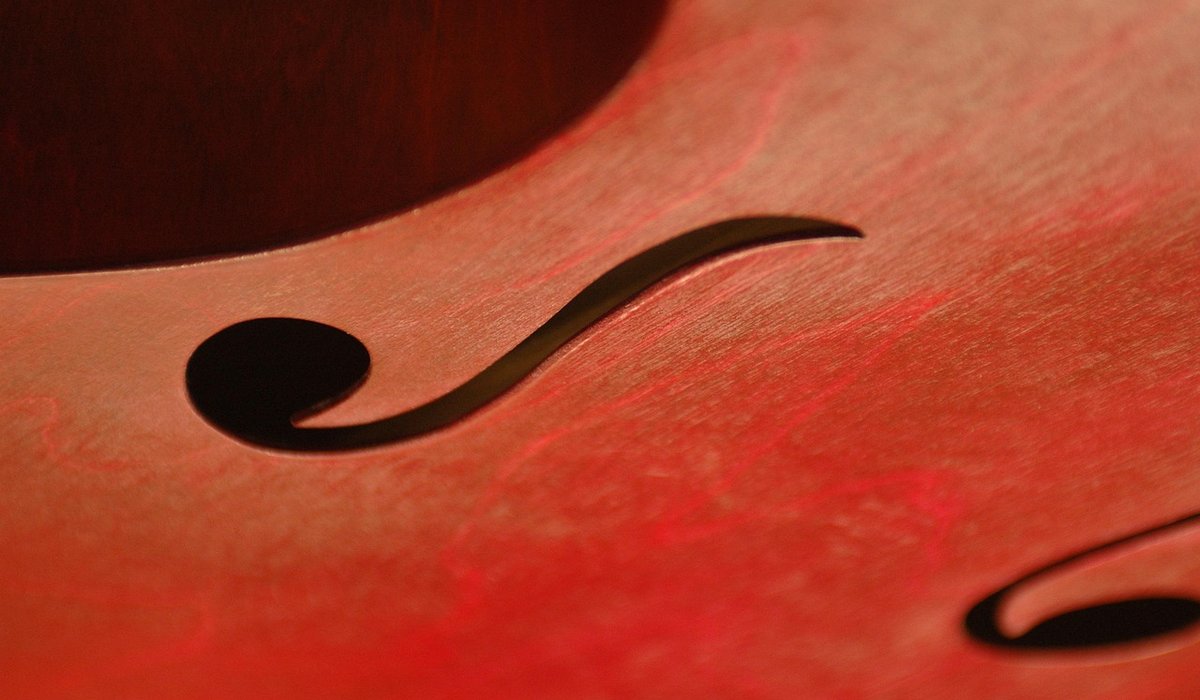
The Viola's Voice in Classical Chamber Works
An Instrument in the Middle
Sit anywhere in a chamber audience and the viola is the voice you feel before you can name it. It rarely carries the tune in the way a first violin does, and it is seldom asked to provide the floor of the harmony like a cello. Instead it lives in the middle of the texture, thickening chords, shadowing melodies, and quietly deciding whether a passage sounds sunlit or clouded. Learning to hear that middle layer is one of the great pleasures of chamber music, and learning to play it well is one of the deepest skills an ensemble can develop.
The viola is not simply a large violin with a lower range. Its tuning — C, G, D, A, a fifth below the violin — gives it a dark, slightly nasal presence on the C string and a warm, reedy quality higher up. In a quartet that voice sits exactly where the ear is most sensitive, which is why a violist who plays too loudly can smother an ensemble and one who plays too timidly can leave the harmony hollow.
Warmth, Weight, and the Note That Decides the Chord
Much of the viola's expressive power comes down to the third of a chord. In a dominant or tonic harmony, the third tells the ear whether the sound is major or minor, bright or melancholy. Composers often place that note in the viola because it can be shaped without dominating: a slightly broader vibrato, a touch more bow weight, and the whole ensemble seems to lean into the harmony.
Good viola playing in chamber music is therefore a study in calibration. The bow needs enough weight to draw tone from the lower strings without the crunch that a heavier stroke produces. Vibrato should match the ensemble rather than announce itself — a warmer, slower pulse when the cello is singing, a narrower one when the second violin is busy. Above all, the violist must listen sideways: to the cello for intonation and pulse, and to the second violin to avoid covering a line that sits just a few semitones away.
Mozart's Quintets: Two Violas, Double the Possibility
Mozart wrote his six string quintets with two violas rather than two cellos, and the choice changed what the inner parts could do. With a pair of violas he could spread the middle across a wider band, letting one hold a harmony while the other took a countermelody. In the C major Quintet, K. 515, the first viola is a genuine melodic partner, answering and echoing the first violin rather than merely filling in. In the G minor Quintet, K. 516, the same instrument darkens the atmosphere, its lower register lending the opening a restless, unsettled colour.
The later quintets, K. 593 and K. 614, give the viola writing of remarkable independence, with passages where it introduces material before the violins take it up. A rewarding exercise is to listen to a Mozart quintet following only the first viola for a full movement. You will hear an inner line that is conversational rather than decorative — and you will notice how often the music would collapse without it.
Brahms's Sextets: The Viola as a Third Melodic Voice
Brahms's two string sextets, Op. 18 in B flat and Op. 36 in G major, add a second cello rather than a second violin, and the effect is a rich, sometimes dangerously thick texture. The violas are given melodic fragments of real character: short phrases that rise out of the harmony, hold the ear for a bar or two, then sink back. Brahms trusts the viola with some of his most tender writing precisely because its tone can cut through a heavy chord without sounding shrill.
Playing these works demands restraint. When six instruments are moving, the viola's natural warmth can turn into congestion. Lightening the bow, easing back on vibrato in dense passages, and giving the cellos room in the bass will keep the texture transparent. In rehearsal, try a passage with the violas playing at three-quarters of their instinctive dynamic; the lines above and below suddenly emerge.
Listening with the Inner Parts in Mind
- Follow the viola alone for one movement, resisting the pull of the melody above it.
- Mark the moments when the viola takes the leading line, however briefly, and note how the texture thins around it.
- Listen for the third of each chord — the note that decides major or minor — and hear where it sits.
- Compare two recordings, one with the viola forward in the balance and one more blended, and decide which you prefer.
Taking the Part into the Rehearsal Room
- Intonation by interval. Tune against the cello's open strings and against the second violin's held notes, not just against a machine.
- Bow economy. Plan distribution so the C string phrases have enough bow left at the tip, where tone thins fastest.
- Seating. Sitting where you can see the cellist's bow arm will do more for ensemble than any amount of counting.
- Dynamic modesty. In most textures, the viola sounds louder to the audience than it does under your ear. Play a shade under what feels right.
- Vibrato as glue. Match the speed and width of whoever holds the tune, and let your own colour return in solo moments.
None of this makes the viola a shrinking instrument. Played with confidence, it is the voice that gives a chamber work its centre of gravity — the warmth between the brightness above and the depth below. Follow it for a while, and you will hear familiar works afresh.


Ensembles
-
Page turns can break concentration. Photocopy awkward pages, plan silent hand movements, or ask a friend to turn, always respecting copyright and venue rules.

Concerts



-

Long established fact that a reader will be distracted
-

Long established fact that a reader will be distracted
-

Long established fact that a reader will be distracted



Repertoire
Karla Gleichauf
12 May 2017 at 05:28 pm
On the other hand, we denounce with righteous indignation and dislike men who are so beguiled and demoralized by the charms of pleasure of the moment
M Shyamalan
12 May 2017 at 05:28 pm
On the other hand, we denounce with righteous indignation and dislike men who are so beguiled and demoralized by the charms of pleasure of the moment
Liz Montano
12 May 2017 at 05:28 pm
On the other hand, we denounce with righteous indignation and dislike men who are so beguiled and demoralized by the charms of pleasure of the moment