

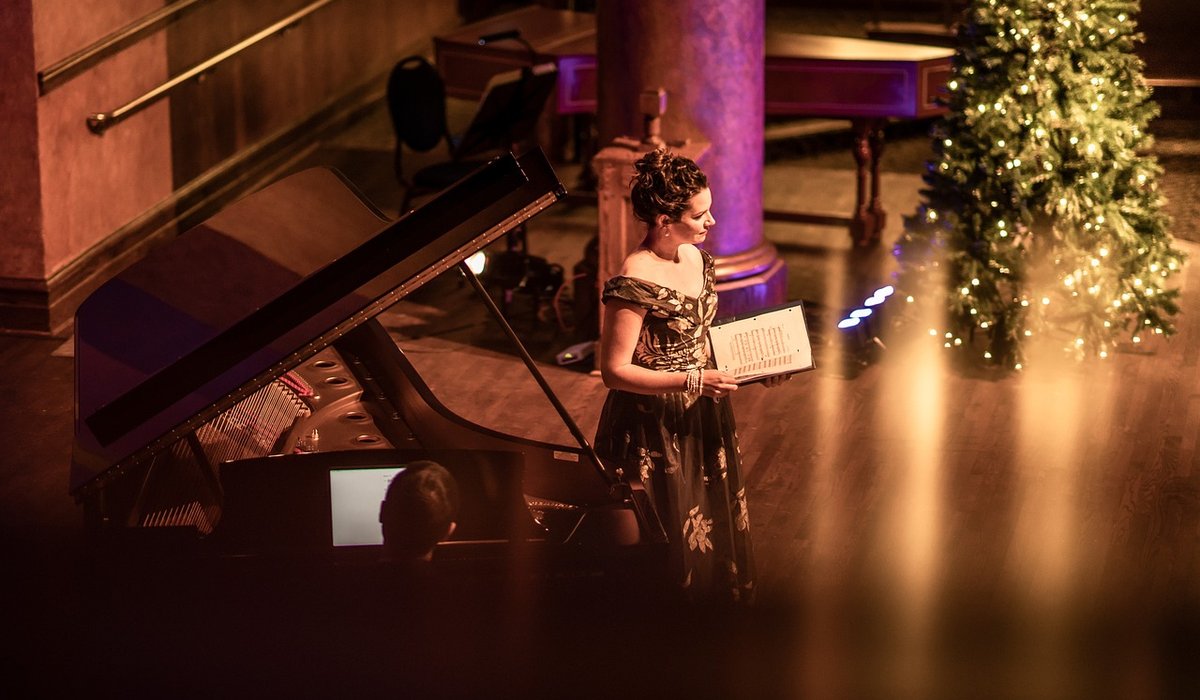
How to Programme a Balanced Chamber Concert
Think in arcs, not lists
A concert programme is not a shopping list of pieces you happen to love. It is a shape in time, and the audience experiences it as one continuous event — from the moment they settle into their seats to the last scrap of applause. Before you choose a single work, sketch that shape on paper: something that opens the door, something that asks for real attention, and something that sends people home satisfied. Two halves of roughly equal weight, one interval, and a clear sense of where the emotional centre of gravity sits.
This matters most when you are programming for friends, for a local music society, or for your own quartet's next recital. You want the unfamiliar to feel like a discovery rather than a test, and the familiar to feel fresh rather than safe. A well-built programme does both.
Keys and tonal architecture
Keys still do quiet work on an audience, even listeners who could not name them. Two consecutive works in the same key can blur into one another, particularly if both end with a bustling finale. Keys a tritone apart — C major followed by F sharp major — can feel like a jolt unless you want that jolt deliberately.
Reliable moves include:
- Dominant to tonic: end the first half in G major and open the second in C, so the interval resolves.
- Relative major and minor: a C minor quartet followed by one in E flat major feels like a release of tension.
- Stepwise ascents for a cumulative effect, saving the brightest key for the close.
If you are unsure, put the work in the flatter, darker key first. Sharp keys tend to feel more brilliant, and that brilliance is better spent later in the evening.
Mood, contrast and the audience's ear
Contrast is your main tool, but it must be contrast of the right kind. Two slow, elegiac works back to back will drain a room, however beautiful each one is alone. Equally, a harrowing piece placed immediately before a charming one gives the audience no room to recover — they will still be processing the first when the second begins.
Think of the emotional temperature rising and falling across the evening. A useful pattern is:
- An opener with character but not excessive length — something that establishes the players' sound.
- A central work that changes the air in the room: a late Beethoven slow movement, a brooding Shostakovich, a Mozart quintet with real depth.
- A shorter, lighter piece to clear the palate.
- A closer with genuine finality — not necessarily loud, but conclusive.
Resist the temptation to put your two favourite works side by side. They will compete.
The arithmetic of duration
Count the minutes honestly, including the gaps. A typical first half runs 35 to 40 minutes of music; the second half can be slightly shorter, especially if you plan an encore. Changeovers are not free: retuning, moving stands, repositioning a piano and resetting chairs can eat five minutes between works, and the audience notices dead air.
- Two short single-movement works of eight minutes each can share a slot comfortably.
- A 25-minute sonata should not be followed by another long work without a break or a light interlude.
- Late Romantic chamber works often run longer than you remember — time them with a stopwatch, not from memory.
- If the total exceeds 90 minutes of music, cut something. Nobody has ever complained that a concert was too well paced.
Placing the demanding work
The most technically and emotionally demanding piece belongs where players and audience are both still fresh. In practice that means the start of the second half, or the penultimate slot with a short, confident closer after it. Brahms's clarinet quintet, Bartók's fourth quartet or a late Beethoven opus will land far better there than at the end of a long evening.
Be honest about stamina. If your first violinist has carried a taxing first half, a ferociously difficult finale will show it in the intonation, however well rehearsed it is. Likewise, a work with a long, exposed slow movement needs a player who has not just spent forty minutes in the top register. Place difficulty where energy is highest, and place consolation where it is lowest.
Practicalities and final checks
Then come the logistics that audiences never see but players always feel. How many people are needed on stage at once? Does anyone double on a second instrument? Does the piano need moving between halves, and have you allowed time for it? Is there a work in which one player sits out entirely, giving them a genuine rest before a demanding finale?
Finally, print the running order with movement listings, so nobody sits through a slow movement unsure whether to applaud. Play the programme through in your head, time by time, imagining the walk to the interval and the mood at the end. If something nags — a key clash, a sagging first half, a closer that isn't quite final — change it now. A balanced programme is not a compromise; it is the difference between an evening that passes and one that stays with people for years.


Ensembles
-
Rare combinations such as clarinet, viola, and piano require patience. Search library catalogues, ask tutors, and explore public domain archives before commissioning a new arrangement.


Concerts




-

Long established fact that a reader will be distracted
-

Long established fact that a reader will be distracted
-

Long established fact that a reader will be distracted




Repertoire
Karla Gleichauf
12 May 2017 at 05:28 pm
On the other hand, we denounce with righteous indignation and dislike men who are so beguiled and demoralized by the charms of pleasure of the moment
M Shyamalan
12 May 2017 at 05:28 pm
On the other hand, we denounce with righteous indignation and dislike men who are so beguiled and demoralized by the charms of pleasure of the moment
Liz Montano
12 May 2017 at 05:28 pm
On the other hand, we denounce with righteous indignation and dislike men who are so beguiled and demoralized by the charms of pleasure of the moment